
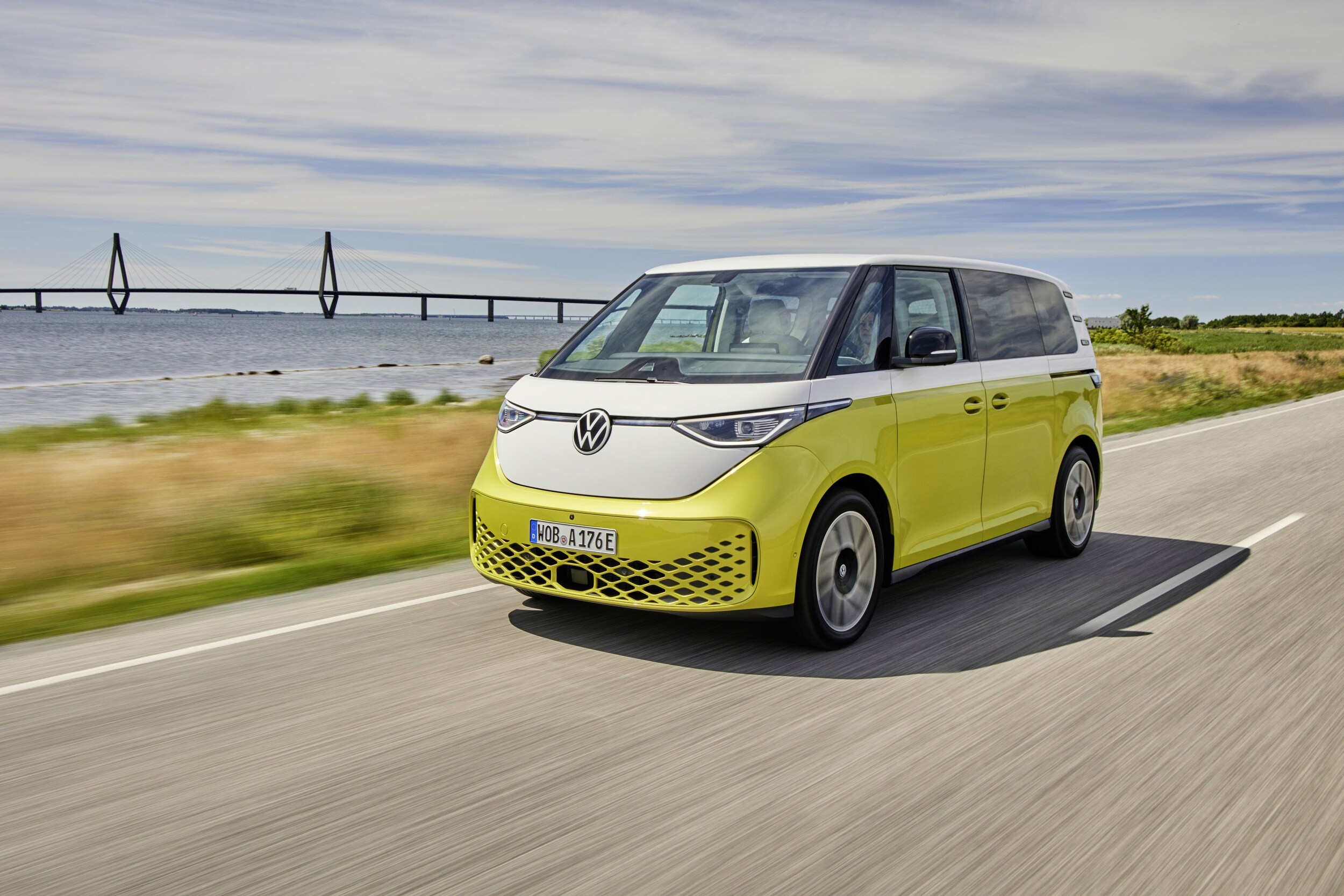
The Volkswagen ID. Buzz gives families three rows of usable seating, sliding rear doors, and an all-electric alternative to the usual family vehicle. Here at Volkswagen of Kirkland, we can help you explore how that combination fits school drop-offs, errands, and weekends away. With O'Brien Auto Group as our parent group, we're focused on helping Kirkland families understand what living with this Volkswagen would actually look like.
Key Takeaways
- Available six- and seven-passenger layouts give families two different second-row arrangements.
- With all three rows in use, there are 18.6 cubic feet behind the rear seats.
- Captain's chairs provide a center route to the third row.
- Published EPA range estimates support everyday driving, while longer trips require charging stops.
- Families without home charging can use workplace or public stations when access fits their routine.
Seating Options for Six or Seven People
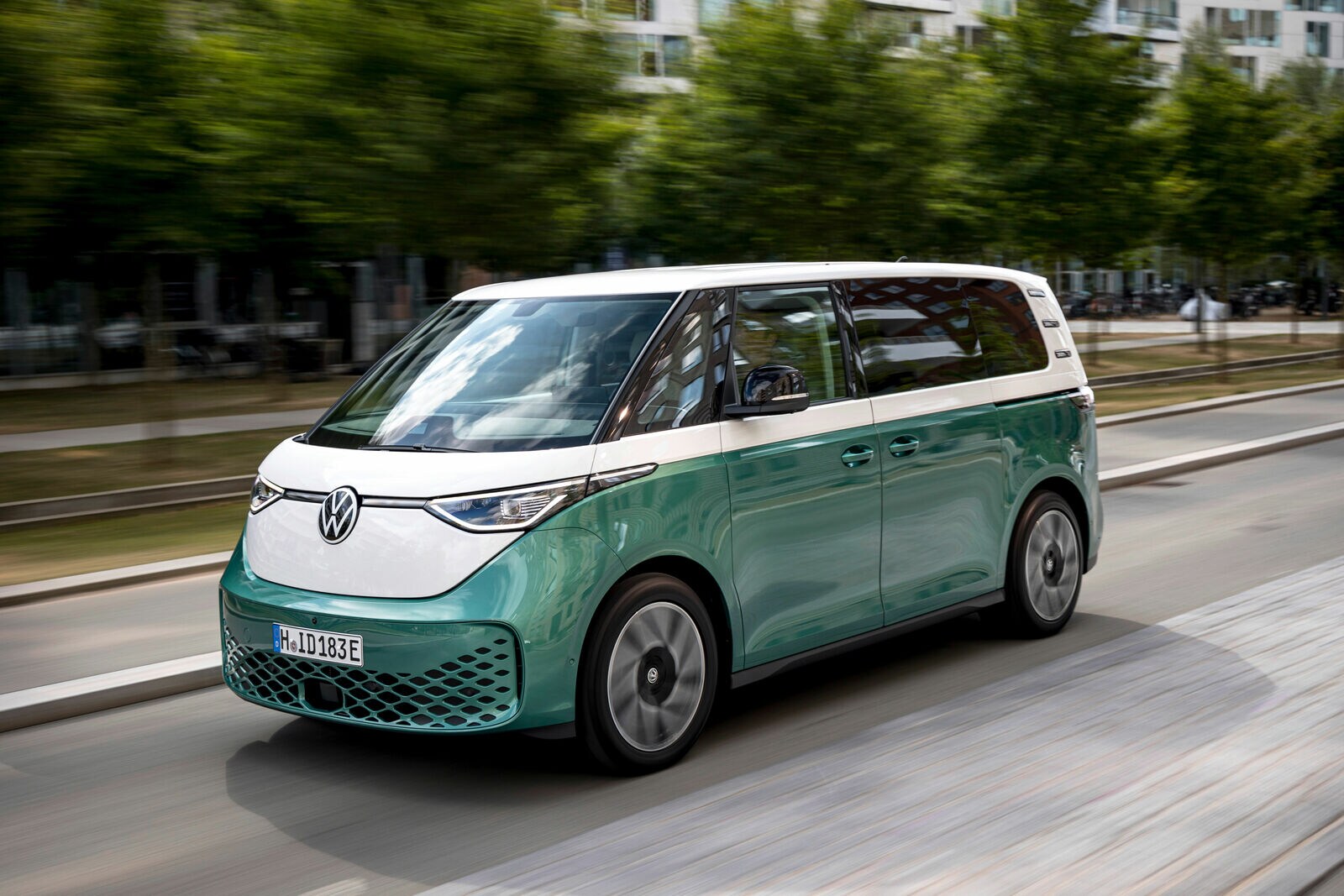
You can seat six people with second-row captain's chairs or seven with a second-row bench. Both arrangements have two front seats and a two-person third row, so the main difference is whether you want an extra seat or an opening between the second-row passengers.
The bench makes sense when you regularly carry another child or adult. Captain's chairs give two passengers individual seats and leave a center passage toward the back. For a Kirkland household that uses the third row every day, that passage can be more useful than a seventh seating position.
There is substantial room beyond the front seats, too. Published measurements include 39.9 inches of second-row legroom and 42.4 inches in the third row. The second-row seats slide, and the third-row seats slide and recline, allowing you to adjust the cabin around the people riding along. Those measurements describe available space, rather than promising that every seat reaches its maximum simultaneously.
If you're deciding between layouts, browse our current selection at Volkswagen of Kirkland to see which seating configurations are available.
How Do Car Seats Affect Third-Row Access?
Second-row captain's chairs give passengers a route between the seats when installed child restraints make access around them difficult. With a bench, reaching the back depends more on access past the outboard seats, so the location and size of each child restraint matter.
The sliding rear doors help by opening alongside the vehicle rather than swinging into the neighboring parking space. That makes the doorway easier to approach when you're helping a child buckle up in a busy Kirkland parking lot. The second row also has a folding access function, but an installed restraint can interfere with the movement needed to reach the back.
LATCH, the Lower Anchors and Tethers for Children attachment system, provides dedicated attachment points for compatible child restraints. In a tested six-passenger ID. Buzz, both second-row captain's chairs and both third-row positions had accessible lower anchors and top tether anchors.
That gives families flexibility to place children across two rows instead of keeping every restraint in the second row. Follow the vehicle and child-restraint instructions for the seating position you use, and keep the required access route clear. Do not operate a seat's folding or access mechanism while a child is sitting in it.
Cargo Room With the Seats Up or Down
With every passenger seat in use, the ID. Buzz provides 18.6 cubic feet of cargo room behind the third row. That's the relevant figure when everyone is coming along and you still need space for everyday gear.
For larger loads, Volkswagen publishes 75.5 cubic feet behind the second row. Maximum capacity reaches 145.5 cubic feet with the second row folded and the third-row seats removed. That maximum requires a different seating arrangement from the one used to carry the whole family.
The individually removable third-row seats let you change the cabin for different jobs. You might keep both installed throughout the school week, then remove them when carrying something larger. The available Flexboard, a raised cargo platform, creates a level loading surface with the rear seats folded and includes storage bins underneath.
For a family heading from Kirkland to activities in Redmond, the benefit is flexibility: passenger seating when you need it and a larger loading area when fewer people are riding.
Driving Range for School Days and Family Trips
The published EPA estimates for the 2025 ID. Buzz are 234 miles with rear-wheel drive and 231 miles with 4Motion, Volkswagen's all-wheel-drive system. These year-specific figures provide a useful starting point when comparing available vehicles.
A school run, commute, and afternoon activities generally involve a different charging routine from an all-day highway trip. Add together the miles you normally drive between charging opportunities, rather than treating the full EPA estimate as a distance you should use every day.
Actual range changes with temperature, speed, elevation, passenger and cargo load, and heating or air-conditioning use. A cold-weather highway trip can therefore require a charging stop sooner than the published estimate suggests.
For longer family trips, plan charging stops along the route before leaving Kirkland. Check the distance between compatible stations and leave enough charge to reach an alternative if your first choice is occupied or unavailable. This makes charging part of the itinerary rather than something to work out near an empty battery.
Charging at Home and Around the Eastside
A family can use an ID. Buzz without home charging when dependable workplace or public charging fits the weekly routine. The important question is whether those stations are available when you normally need them, not simply whether a charger appears on a map.
Level 2 charging uses a 240-volt supply and is suited to longer parking periods, such as overnight at home or during a workday. DC fast charging supplies higher-power direct current for shorter stops. Volkswagen lists a 10-to-80-percent charging time as quick as approximately 26 minutes under suitable conditions for the 2025 ID. Buzz. Battery temperature, starting charge, and station capability affect the result.
If you commute to Bellevue and have reliable workplace charging, you may be able to replenish much of your weekday driving while parked. If public stations would be your only option, look at their hours, compatibility, and availability during the times you would actually visit.
Home charging can make the routine simpler because the vehicle charges while parked. Without it, a dependable charging location and a backup option become a more important part of ownership.
Explore an ID. Buzz in Kirkland
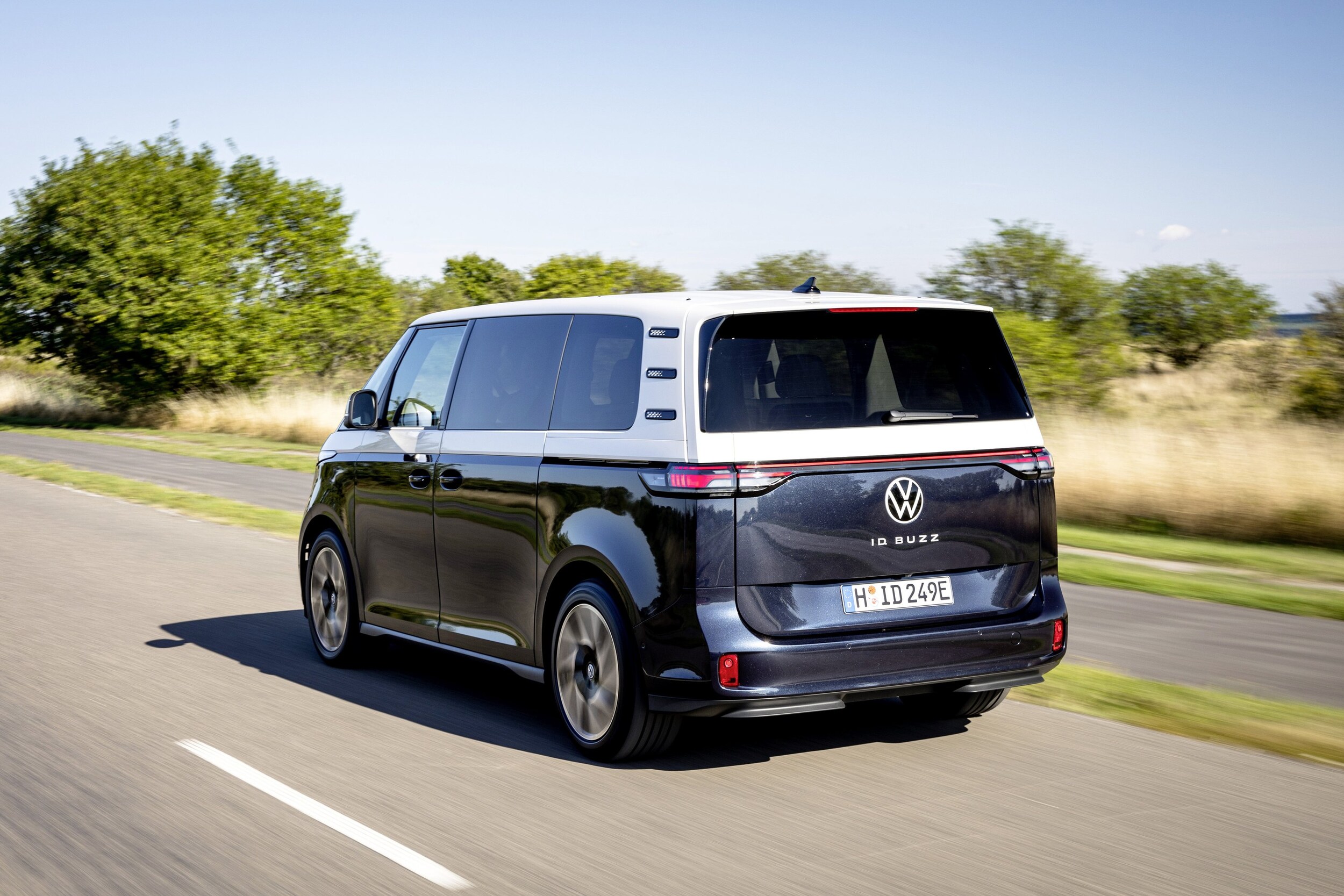
The ID. Buzz combines room for the family with seating and cargo arrangements that can change as your plans do. The most useful comparison is between available vehicles with the layout you want, followed by a drive to see how the seating position, controls, and visibility feel.
Schedule a test drive at Volkswagen of Kirkland in Kirkland and explore an available ID. Buzz. Our parent group, O'Brien Auto Group, supports our work helping families find vehicles that fit everyday life, and we're ready to help you choose between the models in our current selection.
*Penned by AI, polished by humans