
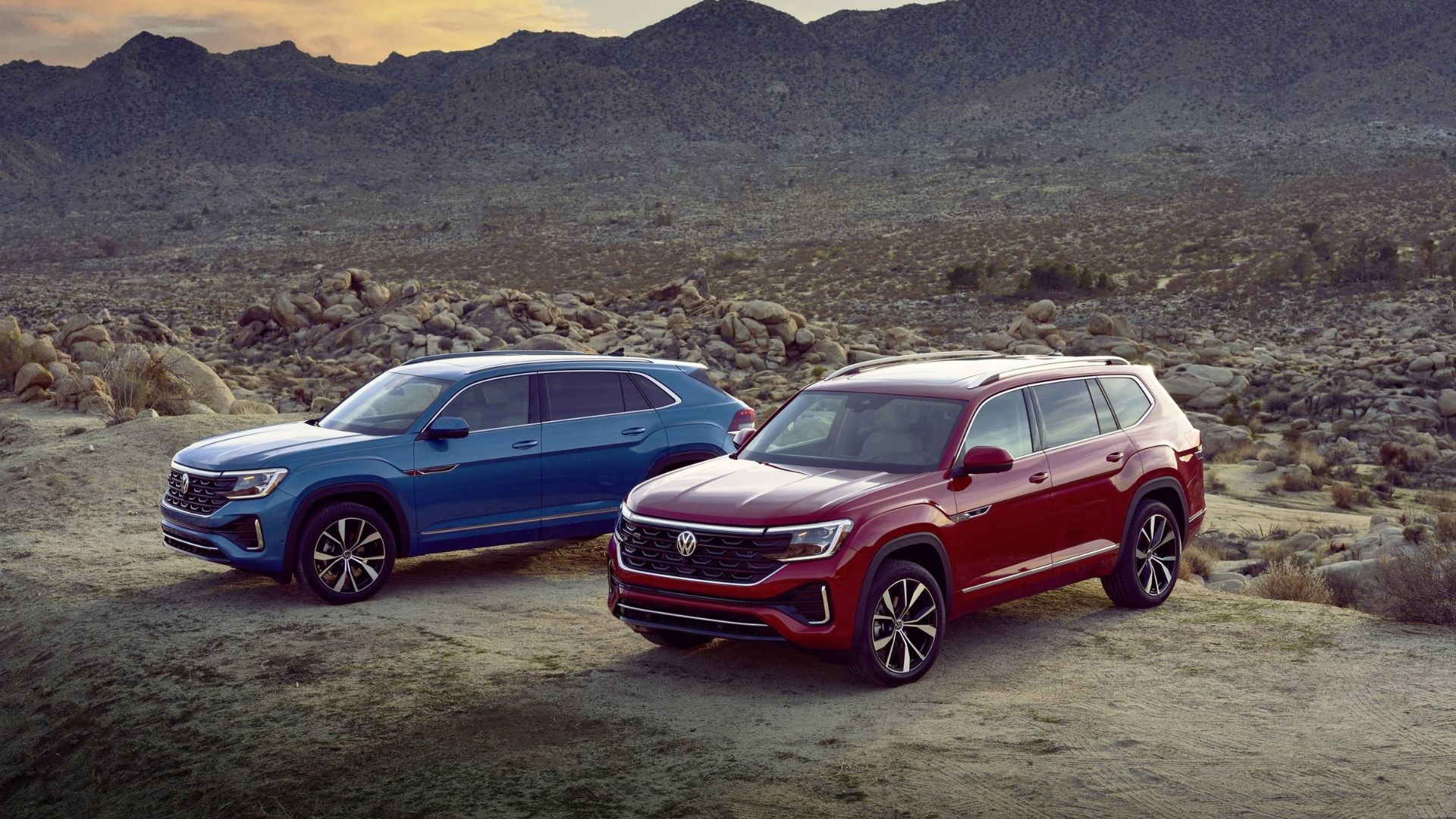
The Volkswagen Atlas is our pick for Kirkland families who regularly use all three rows and want useful cargo room behind them. Here at Volkswagen of Kirkland, we help you compare Volkswagen models around the people riding with you, and our parent group, O'Brien Auto Group, supports that customer-focused approach. The Highlander offers an available hybrid powertrain and seating for eight, but the Atlas makes a strong case when room to grow comes first. The specifications below compare the 2026 models, keeping their equipment and dimensions separate from the redesigned Atlas.
Key Takeaways
- The Atlas provides more third-row legroom than the Highlander.
- With every row upright, the Atlas offers 20.6 cubic feet of cargo room versus 16.0.
- The Atlas seats six or seven, while the Highlander accommodates seven or eight.
- Both SUVs include standard driver-assistance suites and blind-spot monitoring.
- The Highlander Hybrid favors fuel savings, while the Atlas emphasizes passenger and cargo space.
Which SUV Has More Usable Third-Row Space?
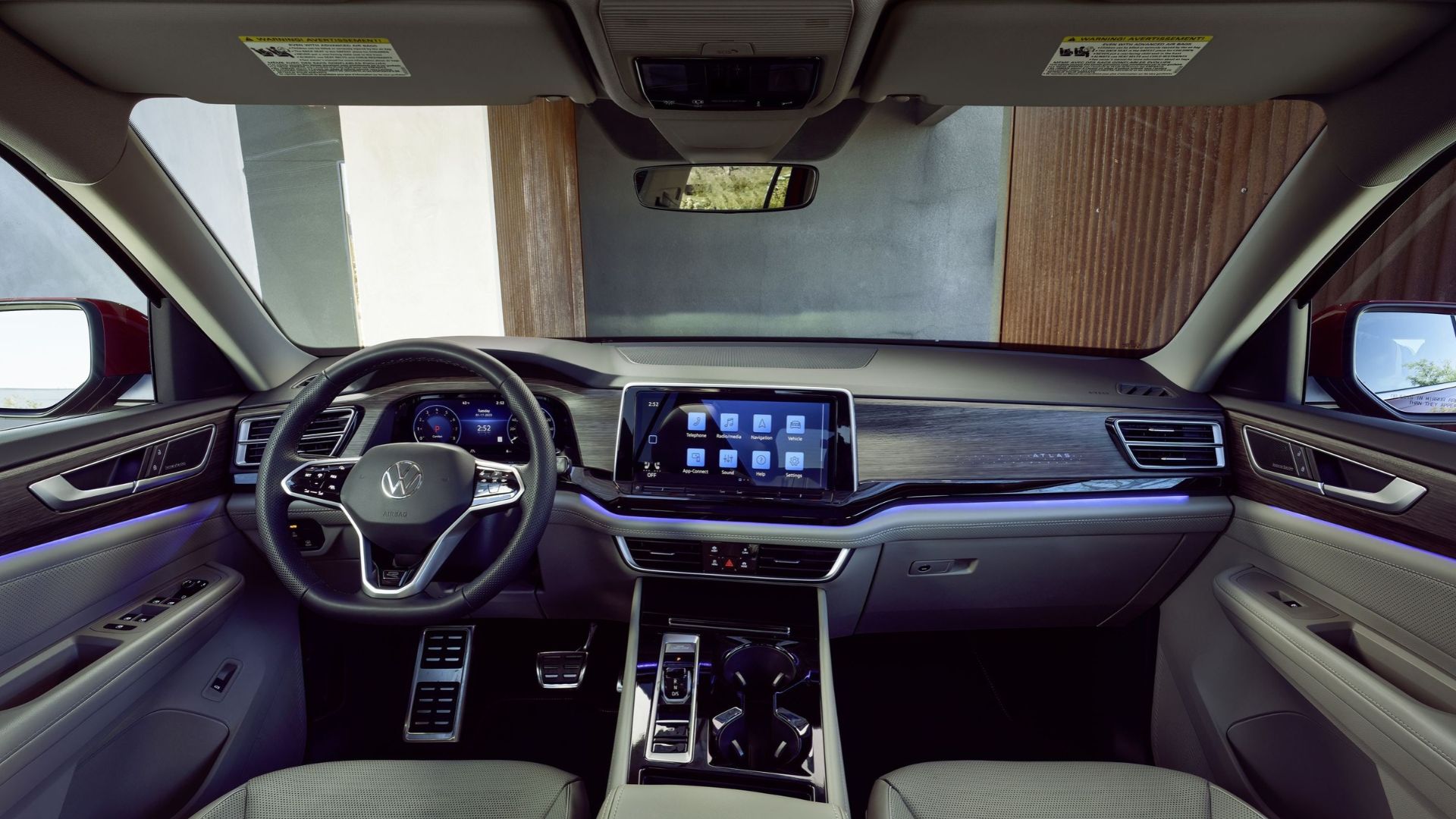
The Atlas gives third-row passengers more room, with 33.7 inches of legroom compared with 28.0 inches in the Highlander. That 5.7-inch difference makes the Volkswagen especially appealing when older children, teenagers, or adults regularly ride in the back.
The Atlas also provides 38.3 inches of third-row headroom. Its two-passenger rear bench gives each rider a defined seating position, while the Highlander puts three seating positions across its third row. For families driving between Kirkland and Bellevue with passengers in every row, the Atlas prioritizes room for the people actually sitting there.
The Highlander has the advantage if you need eight seat belts. However, if your household needs six or seven seats and expects to use the back row frequently, we favor the Atlas for its more generous rear accommodations.
Cargo Room With All Three Rows in Use
The Atlas leaves more room for belongings when everyone is seated, providing 20.6 cubic feet behind the third row versus the Highlander's 16.0 cubic feet. That is an additional 4.6 cubic feet without folding a passenger seat.
For a Kirkland family balancing school pickups, sports equipment, and weekend errands, this is one of the most useful differences between the two SUVs. You retain more storage space while keeping the full seating layout available.
Folding the third row expands the Atlas to 55.5 cubic feet. With both rear rows folded, it provides 96.6 cubic feet, compared with a maximum of 84.3 cubic feet in the Highlander. The Volkswagen therefore offers more flexibility when the day's plans call for fewer passengers and larger purchases.
Seating Configurations and Third-Row Access
The Atlas seats seven with its standard second-row bench or six with available captain's chairs. Captain's chairs are offered on SE with Technology models and above, giving second-row passengers individual seats and opening a center route toward the back.
The standard Atlas bench splits 60/40, and each section slides independently through a 7.7-inch range. That lets you share legroom between the second and third rows rather than leaving everyone with a fixed amount of space. The bench also tilts and slides forward for access from either side.
The Highlander seats seven with captain's chairs and up to eight with an available second-row bench on selected trims. Captain's chairs provide a center passage, while the bench adds a seating position across the middle row.
You can browse our current Atlas selection at Volkswagen of Kirkland to compare bench-seat and captain's-chair configurations.
Standard Safety Features on Comparable Trims
The Atlas SE and Highlander XLE both include substantial standard driver assistance, so essential support does not require choosing the highest trim.
IQ.DRIVE, Volkswagen's driver-assistance suite, comes standard throughout the Atlas lineup. Front Assist, its forward-collision warning and automatic emergency braking system with pedestrian monitoring, helps address potential frontal collisions. Active Side Assist, Volkswagen's blind-spot monitoring system with corrective steering support under certain conditions, is also included.
Travel Assist, Volkswagen's hands-on assistance system for steering, acceleration, and braking support, is standard as well. Rear Traffic Alert, which warns of detected crossing vehicles while reversing and can apply the brakes in certain situations, adds help when backing out.
Toyota Safety Sense 2.5+, Toyota's standard driver-assistance suite, equips the Highlander. It includes Pre-Collision System with Pedestrian Detection, which provides forward-collision alerts and braking support, and Full-Speed Range Dynamic Radar Cruise Control, which helps maintain speed and following distance. Blind Spot Monitor with Rear Cross-Traffic Alert, Toyota's systems for detecting adjacent vehicles and crossing traffic behind you, is also standard.
Both vehicles require an attentive driver. For routine trips through Redmond or along I-405, their standard equipment provides useful assistance while you remain responsible for driving.
Fuel Economy, Equipment, and Ownership Costs
The Highlander uses less fuel in this comparison, while the Atlas combines its larger interior with generous standard comfort equipment.
An Atlas SE or SE with Technology equipped with 4MOTION with Active Control, Volkswagen's all-wheel-drive system that distributes power between the front and rear wheels as needed, earns an EPA-estimated 22 mpg combined. Other Atlas trims with 4MOTION earn 21 mpg combined, while front-wheel-drive versions earn 23 mpg combined.
Toyota lists manufacturer-estimated combined ratings of 24 mpg for the gas Highlander and 35 mpg for the Highlander Hybrid. For families covering substantial mileage, particularly on regular commutes, the hybrid deserves consideration. Actual fuel expenses depend on mileage, fuel prices, and driving conditions.
The Atlas includes heated and ventilated front seats and a heated steering wheel even on the SE. The Highlander XLE includes heated front seats, but ventilated front seats arrive on Limited and Platinum trims. Those equipment differences matter when comparing purchase offers on vehicles you would actually choose.
The Atlas also includes a four-year/50,000-mile New Vehicle Limited Warranty and Carefree Maintenance, Volkswagen's included scheduled-maintenance program covering specified services for two years or 20,000 miles, whichever comes first. The Highlander provides a three-year/36,000-mile basic warranty and ToyotaCare, its included scheduled-maintenance plan, for two years or 25,000 miles. Coverage terms and included services differ.
Test Drive an Atlas in Kirkland
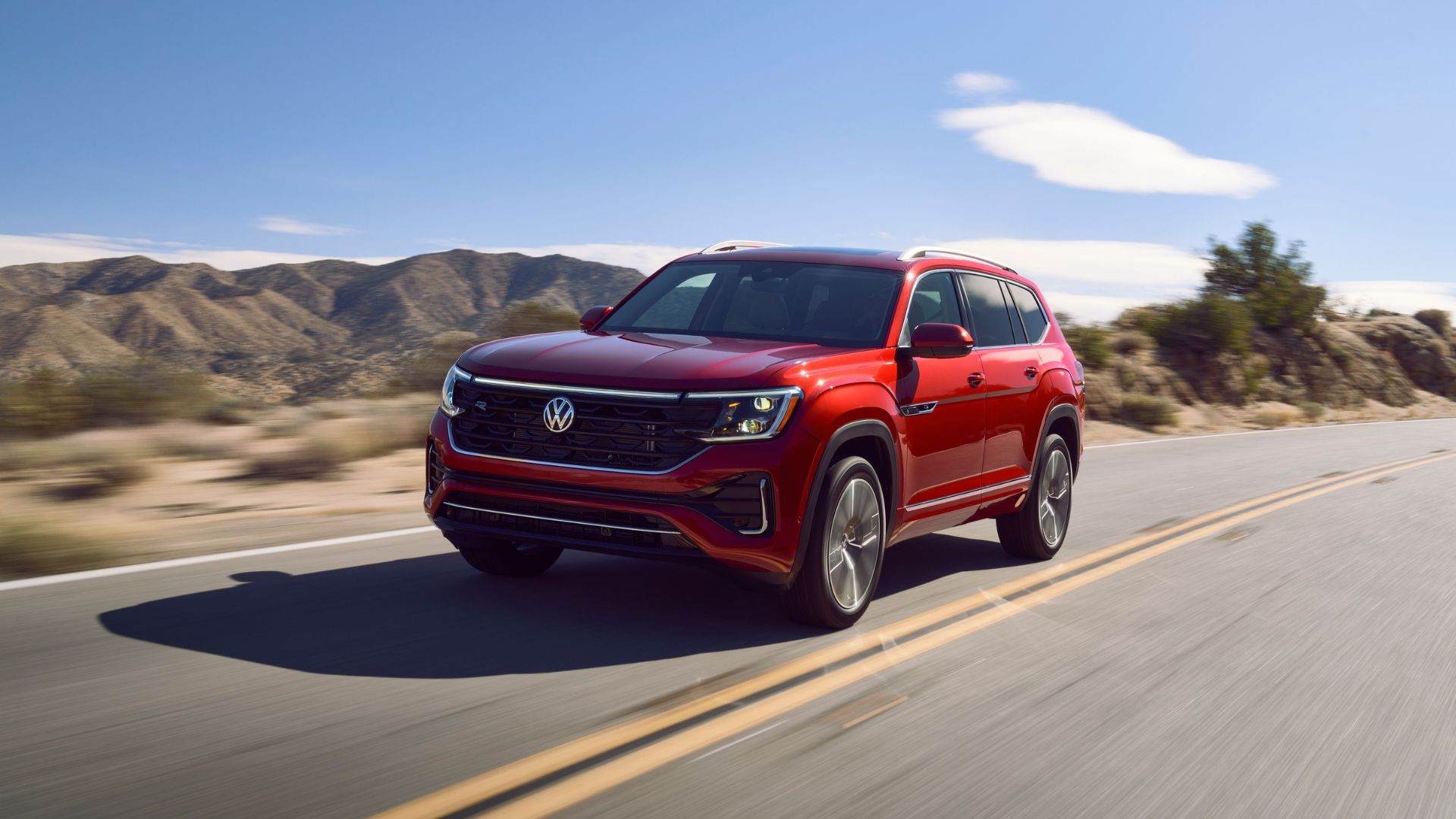
The Atlas is the stronger fit when your family wants a roomier third row, more cargo space with everyone aboard, and useful comfort features without moving to a top trim. The Highlander remains worth considering for eight-passenger seating or hybrid efficiency, but the Volkswagen's everyday space advantages are compelling.
Schedule a test drive at Volkswagen of Kirkland in Kirkland to explore an Atlas from our current selection. With O'Brien Auto Group, we're ready to help you find the Atlas trim and seating layout that fits your family.
*Penned by AI, polished by humans